2026-11-04
Installing a security system in Dubai involves more than choosing cameras and access control devices. Understand five potential risks of using non-approved or non-compliant security solutions, including regulatory issues, financial consequences, security vulnerabilities and operational problems.
A security system should protect your property, not create compliance problems. Whether you manage a villa, residential tower, office, school, hotel, warehouse or commercial facility in Dubai, selecting the right CCTV cameras, access control equipment and security infrastructure is essential.
However, installing equipment without checking applicable approvals and regulatory requirements can expose your property or business to avoidable risks. In Dubai, security installations may be subject to requirements established by the Security Industry Regulatory Agency (SIRA), depending on the property, activity and system scope.
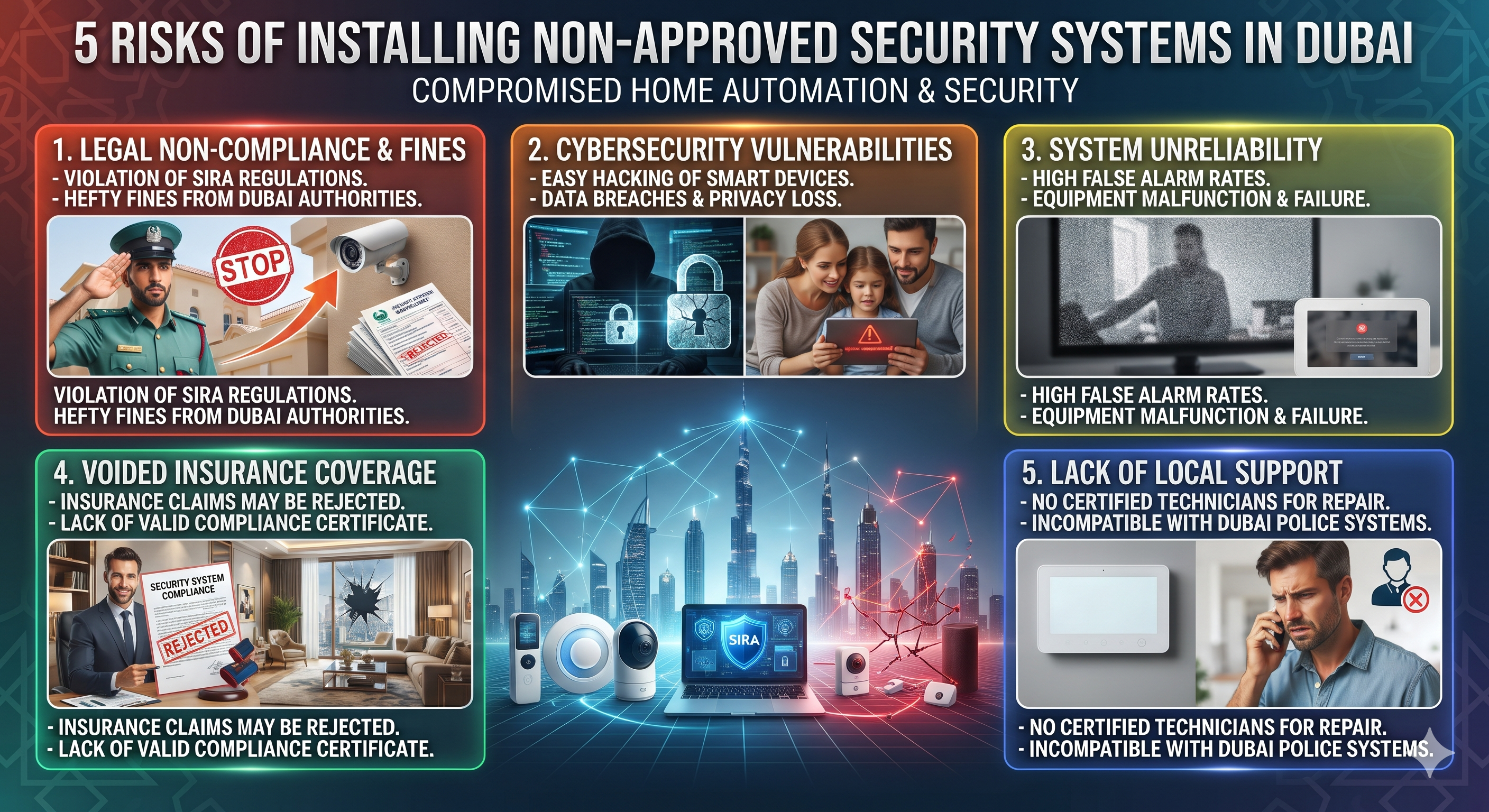
Before investing in CCTV, access control or other security solutions, understand these five important risks of installing non-approved or non-compliant security systems in Dubai.
Security technology plays an important role in protecting people, property, business operations and sensitive information. In Dubai, certain security activities and installations are regulated, and applicable SIRA requirements must be considered during system selection, installation and maintenance.
Compliance is not simply about purchasing a camera with a particular label. Depending on the project, it may involve approved equipment, qualified installation providers, system design, technical specifications, documentation, testing and inspection.
Requirements can vary according to the building type, security application and project scope. Property owners should confirm the applicable requirements with the relevant authority or qualified project professionals before installation.
One of the most important risks is failing to meet the security requirements applicable to your property or business.
If a security installation does not satisfy the relevant SIRA requirements, the property owner or responsible business may face compliance issues. Depending on the circumstances and applicable regulations, this could lead to corrective actions, additional inspections, delays or financial penalties.
For commercial properties, hotels, educational institutions, residential developments and other regulated facilities, compliance should be considered before purchasing or installing security equipment.
How to reduce this risk:
A low-cost security system may appear attractive initially, but unreliable equipment can create serious protection gaps.
Non-compliant or unsuitable cameras may have poor low-light performance, inconsistent recording, limited storage, weak network security or unreliable motion detection. These issues can affect the quality of surveillance when an incident occurs.
For example, a camera installed at a building entrance may fail to capture a clear image at night. An improperly configured recording system may also overwrite important footage earlier than expected.
How to reduce this risk:
Explore CCTV installation solutions in Dubai for surveillance planning across residential and commercial properties.
Choosing equipment based only on its initial purchase price can lead to higher costs later.
If installed devices do not meet project specifications or applicable approval requirements, the owner may need to replace equipment, redesign the system, upgrade cabling or repeat parts of the installation process.
Additional expenses may include:
These expenses can be especially disruptive in large buildings, offices, schools and hospitality projects where security equipment is installed across multiple areas.
How to reduce this risk: Request a detailed quotation that identifies equipment models, technical specifications, installation scope, applicable approvals, testing requirements and ongoing maintenance arrangements.
Modern security infrastructure often combines CCTV, access control, biometric identification, automatic gates, barriers and network systems. When devices are selected without checking compatibility, integrating them can become difficult.
For example, an access control reader may not communicate properly with the selected controller. CCTV software may not support the intended recording equipment, or a gate barrier may require additional interfaces to work with the access control system.
Such problems can create disconnected systems, unreliable automation and additional maintenance requirements.
How to reduce this risk:
For coordinated protection, explore access control solutions and automatic gate and barrier systems from Marvis Technology.
Security systems are expected to work consistently. If an installation has missing documentation, unsuitable equipment or incomplete testing, it may create difficulties during inspections, maintenance or future system upgrades.
For a business, an unreliable access control system can interrupt employee entry and visitor management. In a residential building, camera or recording failures can affect security monitoring. In a school or hotel, poorly planned installations can disrupt daily operations.
Incomplete documentation can also make it harder for technicians to identify device locations, troubleshoot faults or maintain the system properly.
How to reduce this risk:
The applicable requirements depend on the property's use, security activity and project scope. Some common security technologies that may require regulatory or project-specific checks include:
Not every smart home device or general automation product is automatically subject to the same SIRA approval process. Confirm the requirements for the specific equipment and application rather than assuming that one approval rule applies to every technology.
Selecting the right installation partner is an important step towards reliable and compliant security infrastructure. Before appointing a provider, consider the following checklist:
For additional guidance, read our article on how to choose a SIRA-approved home automation company in Dubai.
Every property has different security requirements. A villa may need perimeter surveillance, smart entry and automated gates, while a commercial building may require centralised CCTV monitoring, access control and structured network infrastructure.
Marvis Technology LLC provides technology and automation solutions for residential and commercial projects in Dubai and across the UAE. Depending on project requirements, solutions can include:
Each project should be assessed individually to determine the appropriate equipment, integration approach and applicable regulatory requirements.
Not every CCTV application follows an identical approval process. Requirements depend on the property type, activity and applicable regulations. Confirm the requirements for your specific project with the relevant authority or a qualified security professional.
A non-compliant installation may require corrective work, equipment replacement, additional inspections or other regulatory action. Financial penalties may also apply depending on the circumstances and applicable rules.
Basic consumer camera use and regulated security installations may have different requirements. Before installing cameras, check applicable privacy, building and security regulations, particularly for commercial or regulated properties.
Request the exact manufacturer and model number from your supplier, along with relevant approval documentation where applicable. Verify the information against the requirements of the relevant authority rather than relying only on marketing claims.
In many cases, an existing installation can be assessed and upgraded. The process may involve replacing unsuitable devices, improving camera coverage, upgrading recording or network infrastructure and completing required testing or approvals.
No. General smart home products such as lighting controllers, smart switches and motorised curtain systems do not automatically fall under the same requirements as regulated security installations. Requirements should be checked according to the actual product and project application.
A security installation should deliver dependable protection while meeting the requirements applicable to your property. Choosing suitable equipment, planning the infrastructure correctly and working with qualified professionals can help prevent avoidable compliance issues, replacement costs and operational problems.
Planning a CCTV, access control or integrated security project in Dubai? Contact Marvis Technology LLC to discuss your project requirements and explore suitable security and automation solutions.
Request a Project Consultation
Marvis Technology LLC — Smart Security. Reliable Integration. Better Protection.
Need help with smart home automation or security? Our experts are ready to assist you.
Fill out the form and we’ll get back to you.