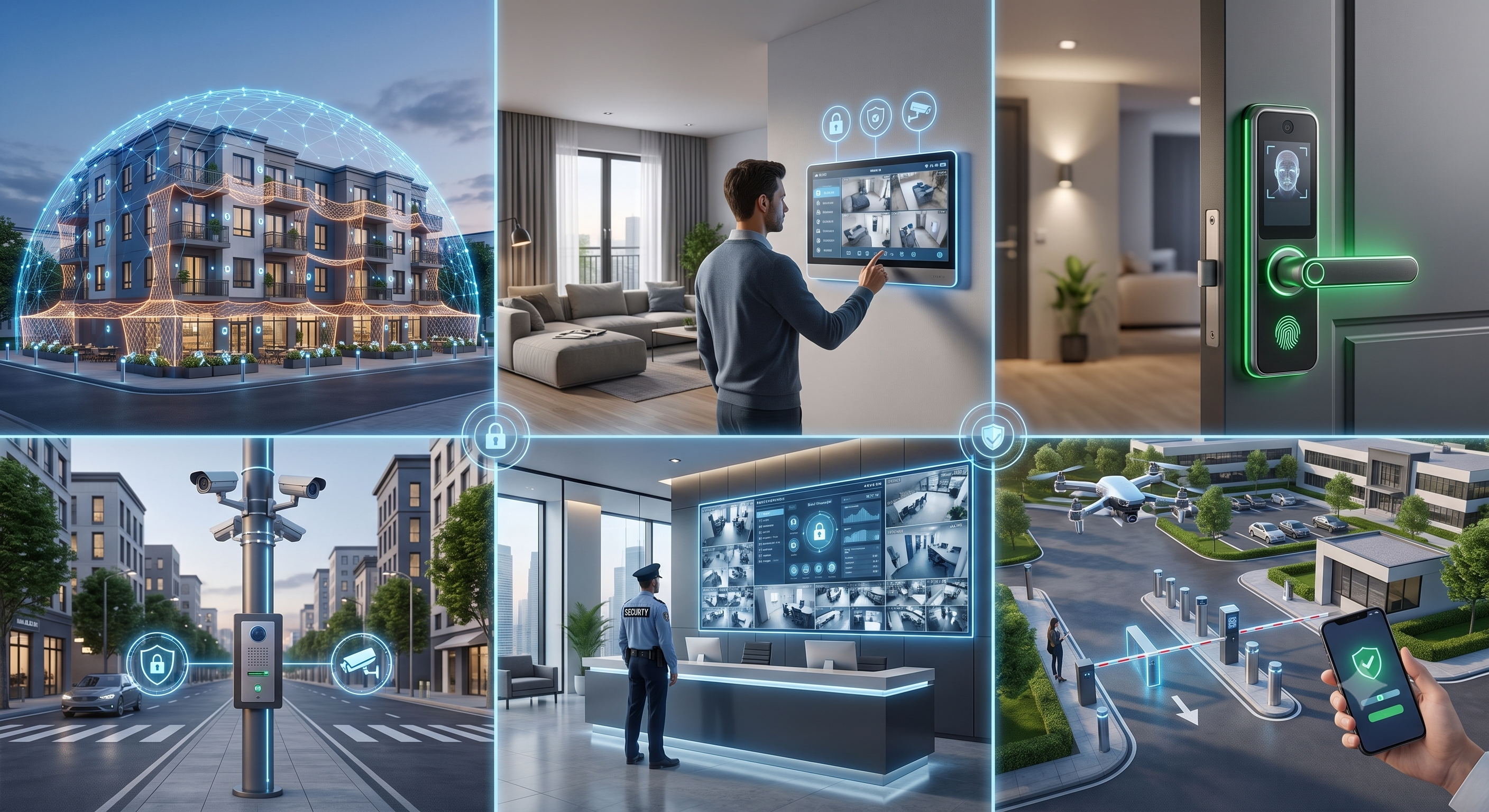
Managing a modern residential tower or multifamily property means balancing tenant safety, convenient access, reliable building operations, and a comfortable living experience. As apartment communities across Dubai and the UAE continue to evolve, connected building technologies can help property owners and facility managers manage these priorities more effectively.
From CCTV surveillance and controlled entry to intercoms, smart building automation, and network infrastructure, the right technology can help create a more organised and responsive residential environment.
Marvis Technology LLC provides security, automation, and technology integration solutions for residential and commercial properties. For projects involving regulated security systems in Dubai, the applicable Security Industry Regulatory Agency (SIRA) requirements must be identified and verified for the specific property, equipment, and installation.
Why Smart Security Matters in Multifamily Buildings
Apartment buildings have multiple entry points, shared corridors, parking areas, service entrances, and common facilities. Managing access and monitoring these areas can become challenging when systems operate independently or rely entirely on manual processes.
Appropriately designed security and building technology can help property managers:
- Monitor designated common areas through suitable CCTV systems.
- Manage authorised entry to selected doors and restricted areas.
- Coordinate visitor communication and entry procedures.
- Receive configured alerts from compatible security devices.
- Improve visibility across designated building zones.
- Support more organised security operations and maintenance.
Technology should complement established building procedures, trained personnel, emergency plans, and applicable legal requirements. No system can guarantee complete protection against every security incident.
Understanding SIRA Requirements for Building Security in Dubai
SIRA regulates relevant security services and systems in Dubai. Depending on the property type, project scope, and applicable rules, certain CCTV and other security installations may need to meet specific technical, approval, installation, or service-provider requirements.
For owners, developers, consultants, and facility managers, compliance should be considered during the planning stage rather than left until the installation is complete.
Important considerations may include:
- Project requirements: Confirm which regulations and technical requirements apply to the specific building and security installation.
- Approved equipment and design: Verify the relevant requirements for cameras, recording equipment, system architecture, and other regulated components.
- Qualified service providers: Confirm that the responsible provider holds the required approvals or licences for the work being undertaken.
- Installation and testing: Ensure the system is installed, configured, tested, and documented according to applicable requirements.
- Ongoing maintenance: Establish suitable procedures for system checks, fault reporting, and maintenance.
Important: Do not assume that every smart home device, access-control product, or building automation platform is automatically SIRA approved. Compliance depends on the applicable rules and the specific security project. Requirements should be confirmed with SIRA or the relevant authorised parties before work begins.
1. CCTV Surveillance for Residential Towers and Shared Areas
CCTV can help authorised building personnel review activity in designated areas and investigate reported incidents. For multifamily properties, camera placement and system design should be based on the building layout, operational requirements, privacy considerations, and applicable regulations.
Potential monitoring locations include:
- Building entrances and designated exit areas.
- Reception and concierge areas.
- Parking entrances and selected parking zones.
- Service entrances and loading areas.
- Selected common corridors and shared facilities, where permitted.
- Other locations identified through the property's security assessment.
Camera coverage should avoid inappropriate intrusion into private residential spaces. Recording access, retention, signage, and data handling should follow the requirements applicable to the property and its operations.
Marvis Technology LLC offers CCTV installation solutions in Dubai for projects that require suitable surveillance planning and integration.
2. Access Control for Doors, Entrances, and Restricted Areas
Access-control systems help property managers manage who can enter designated building areas. Depending on the selected system, credentials may include access cards, PIN codes, mobile credentials, biometric methods, or other supported technologies.
Access control may be considered for:
- Main building entrances.
- Staff-only and service areas.
- Plant rooms and technical spaces.
- Parking access points.
- Shared facilities with controlled access.
A well-planned system should define user permissions, access schedules, credential management, and procedures for lost credentials or departing staff. Emergency egress and life-safety requirements must also be considered when selecting and configuring door hardware.
Explore our access-control solutions in the UAE for suitable entry-management options.
3. Visitor Management and Video Intercoms
Residential buildings regularly receive visitors, delivery personnel, contractors, and service providers. Video intercom and visitor-management technologies can help residents and authorised building staff communicate with visitors before granting access.
Depending on the system, features may include:
- Audio or video communication at designated entrances.
- Visitor verification by authorised residents or staff.
- Integration with compatible door-release equipment.
- Mobile notifications or remote answering where supported.
- Visitor procedures tailored to the building's operating model.
Visitor systems should be configured with appropriate permissions and safeguards. Remote door release should only be enabled where supported by the system design and the building's security procedures.
4. Smart Building Automation for Common Areas
Building automation can coordinate selected systems to make shared spaces easier to manage. For example, compatible lighting controls can follow schedules, while supported sensors can help automate selected functions based on occupancy or other configured conditions.
Potential applications include:
- Lighting schedules for lobbies and shared facilities.
- Occupancy-based lighting in suitable common areas.
- Monitoring selected equipment through supported interfaces.
- Integration of compatible building systems through a central platform.
- Alerts for configured faults or operating conditions.
Automation can support operational efficiency, but the available functions depend on the building's infrastructure and compatible equipment. Fire detection, emergency lighting, lifts, and other life-safety systems must be designed and maintained in accordance with their specific standards and requirements. General smart home automation should not replace certified life-safety systems.
Discover our smart building automation solutions for connected residential and commercial environments.
5. Reliable Network Infrastructure for Connected Security
CCTV cameras, access-control panels, intercoms, and connected building devices depend on suitable infrastructure. Network planning is therefore an important part of a reliable building technology installation.
Project considerations may include:
- Network capacity for connected devices and video traffic.
- Appropriate network segmentation and access restrictions.
- Secure configuration and individual authorised accounts.
- Suitable power and connectivity for installed equipment.
- Network monitoring and maintenance procedures.
- Backup and recovery planning for critical configurations.
Security devices should not be exposed unnecessarily to the public internet. Strong credentials, supported firmware updates, controlled remote access, and appropriate network design help reduce avoidable cybersecurity risks.
Learn more about our networking infrastructure solutions in the UAE.
6. Integrate Security Systems Carefully
Connecting CCTV, access control, intercoms, and building management systems may provide a more coordinated operational view. However, integration is possible only when the selected systems support the required interfaces, permissions, and communication methods.
Depending on the project, authorised personnel may be able to use a centralised interface to access selected camera feeds, review permitted access events, or manage supported building functions.
Before combining systems, confirm:
- Compatibility between the proposed products and software.
- Which events and functions can actually be shared.
- Who is authorised to view footage or manage access.
- How data is stored, retained, and protected.
- How the system behaves during network or power interruptions.
- Whether integration affects regulatory or approval requirements.
Integration should improve usability without compromising security, privacy, or compliance obligations.
7. Protect Tenant Privacy and Manage Data Responsibly
Tenant confidence is essential to successful building management. Security technology should be deployed for legitimate purposes, with appropriate safeguards for personal data and recorded information.
Property owners and operators should establish clear procedures for:
- Authorised access to surveillance footage and system records.
- Data retention and secure deletion in line with applicable requirements.
- Responding to requests for access to recorded information.
- Securing administrator accounts and remote access.
- Maintaining appropriate signage and privacy notices where required.
- Managing service-provider access and system maintenance.
Camera locations, recording practices, and data handling should comply with applicable laws and regulations. A security installation should be designed to support safety while respecting residents' privacy.
8. Plan for Maintenance and Long-Term Reliability
Installing security equipment is only one part of managing a building. Cameras may need cleaning or adjustment, storage systems need monitoring, credentials must be updated, and software or firmware may require maintenance.
A practical maintenance plan should address:
- Routine inspection of cameras, readers, and other devices.
- Verification of recording and storage operation.
- Testing of configured notifications and access procedures.
- Review of user permissions and administrator accounts.
- Network health and cybersecurity updates.
- Documentation of faults, repairs, and system changes.
Maintenance intervals and testing procedures should follow the equipment specifications, project requirements, and any applicable regulatory obligations.
How to Plan a Smart Security Project for a Multifamily Building
- Assess the property: Review entrances, parking areas, shared spaces, existing infrastructure, and operational needs.
- Identify applicable requirements: Determine the SIRA and other regulatory requirements relevant to the specific project.
- Define the scope: Establish the required CCTV coverage, access-control functions, intercom features, and building integrations.
- Check equipment compatibility: Confirm system capacity, interfaces, network requirements, and expansion options.
- Plan privacy and cybersecurity: Establish access permissions, data handling, retention, and secure configuration procedures.
- Install and test: Complete the installation, commissioning, documentation, and required approvals through appropriately qualified parties.
- Prepare for ongoing operation: Establish maintenance responsibilities, fault reporting, and review procedures.
Why Work with Marvis Technology LLC?
Marvis Technology LLC supports residential and commercial projects in Dubai and across the UAE with technology, security, automation, and infrastructure solutions.
Our services can include:
- CCTV and surveillance system installation.
- Access-control and entry-management solutions.
- Smart building automation and system integration.
- Networking infrastructure and connected-device planning.
- Compatible intercom and smart control solutions.
- Technical coordination and project-specific system planning.
For projects involving regulated security systems, the applicable SIRA requirements, provider qualifications, equipment suitability, and approval process should be confirmed before implementation. Any compliance representation should relate to the specific approved scope rather than automatically covering every technology in the building.
Frequently Asked Questions
What is smart security for multifamily buildings?
Smart building security combines suitable technologies such as CCTV, access control, intercoms, and connected monitoring tools to support authorised entry, visibility, and building security operations.
Are CCTV systems in Dubai required to meet SIRA requirements?
Requirements depend on the property, system, and applicable regulations. Relevant CCTV projects may be subject to SIRA requirements. Property owners and project teams should verify the rules and approval process for their specific installation.
Does SIRA approval apply to every smart building device?
No. SIRA requirements relate to applicable regulated security systems, services, and projects. Smart lighting, general automation, networking, and other devices should not automatically be described as SIRA approved.
Can CCTV and access control work together?
They may be integrated when the selected products and software support the required interfaces. The project design should also address permissions, cybersecurity, privacy, and applicable regulatory requirements.
How can apartment buildings improve tenant access management?
Suitable access-control systems, visitor procedures, and compatible intercoms can help manage entry to designated areas. The right approach depends on building layout, tenant needs, emergency egress requirements, and the selected equipment.
How much does smart building security cost in Dubai?
Costs depend on building size, camera coverage, access points, equipment, infrastructure, integration requirements, and compliance obligations. A site assessment and defined scope of work help establish a project-specific quotation.
Protect Your Property with Smart, Compliant Building Technology
Modern building technology can help property owners and facility managers create a more organised, connected, and security-conscious environment for residents. The best solution combines appropriate equipment, careful integration, privacy safeguards, ongoing maintenance, and compliance with applicable requirements.
Planning a residential tower, apartment complex, or multifamily property security project in Dubai? Contact Marvis Technology LLC to discuss your requirements for CCTV, access control, networking, and smart building integration.
WhatsApp: Request a building security consultation on WhatsApp
Phone: +971 54 740 3829
Email: sales@marvistechno.com
Location: Dubai, United Arab Emirates