
2026-09-27
Marvis Technology LLC provides Building Management System (BMS) and smart building automation solutions in Dubai and across the UAE, integrating HVAC, lighting, energy monitoring, access control, security and other compatible building systems into a centralized management environment.
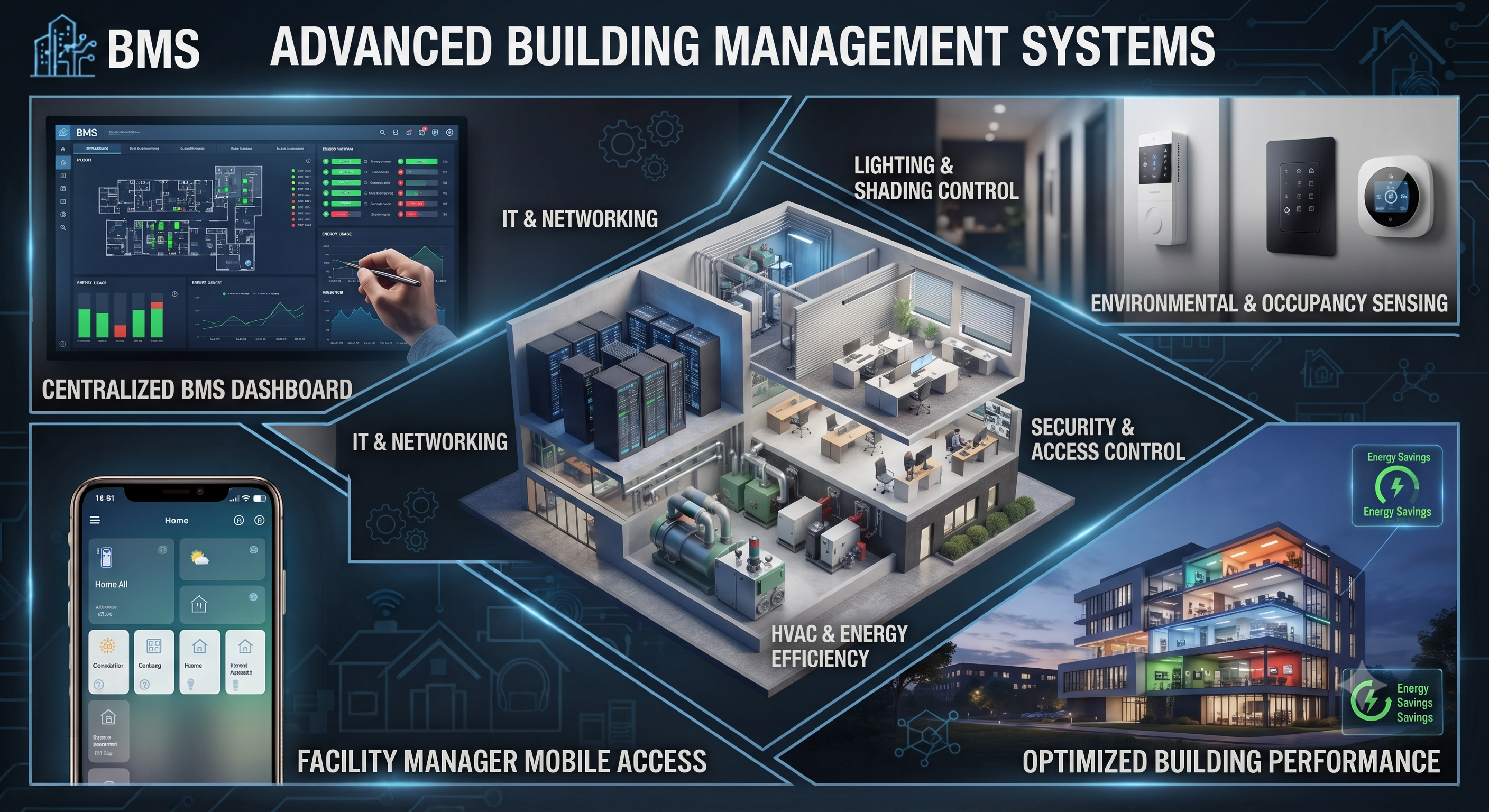
Is your building operating through separate HVAC, lighting, security and facility systems — or can you manage them through one intelligent control environment?
Modern commercial and residential buildings in Dubai increasingly require more than individual building systems. They need coordinated control, monitoring and automation.
A Building Management System (BMS) can bring compatible building services into a centralized management environment, helping facility teams monitor and control important building functions from a unified interface.
Marvis Technology LLC provides Building Management System and smart building automation solutions in Dubai and across the UAE for offices, commercial buildings, hotels, schools, hospitals, residential developments and other modern facilities.
A Building Management System (BMS) is a centralized system used to monitor, manage and control compatible building services.
Depending on the project architecture and installed equipment, a BMS may integrate systems such as:
The exact functions depend on the building, automation architecture, equipment and communication protocols selected for the project.
A Building Management System collects information from connected building equipment, processes the information through the control architecture and provides monitoring or control through configured interfaces.
A typical BMS environment can include:
This creates a connected building environment instead of relying entirely on isolated systems.
Large buildings can contain hundreds or thousands of devices, rooms, HVAC zones, lighting circuits and other operational components.
Managing these systems separately can make building operations more complicated.
A properly designed BMS can provide a centralized approach to monitoring and managing compatible building systems.
For facility managers, this can provide better visibility into:
HVAC is one of the most important areas of building automation in the UAE because maintaining comfortable indoor conditions is essential for commercial and residential properties.
A BMS can integrate compatible HVAC equipment and provide centralized monitoring and control of configured zones.
Depending on the HVAC architecture, the system may monitor or manage:
Automation strategies should be designed according to the building's HVAC equipment, engineering requirements and operational objectives.
Lighting can also be integrated into a building automation environment.
Compatible lighting systems can be monitored and controlled according to configured schedules, zones, occupancy conditions and building requirements.
Possible applications include:
Lighting control can also be coordinated with other building automation functions where the installed systems support the required integration.
Energy visibility is an important part of modern building management.
Where compatible meters, sensors and systems are integrated, a BMS can provide information about building energy usage and equipment operation.
This can help facility teams identify operational patterns and investigate areas where building systems may require adjustment.
Energy management strategies can include:
Actual energy savings depend on the building, equipment, controls, operating practices and implementation strategy.
Commercial buildings often contain multiple floors, departments, tenants and building systems.
A centralized BMS can provide facility teams with a common environment for monitoring and managing compatible systems.
Applications can include:
Hotels require coordinated management of guest areas, back-of-house spaces, HVAC systems, lighting and other building services.
A BMS can help create a centralized operational environment for compatible hotel systems.
Potential applications include:
Schools and educational facilities can benefit from centralized management of building services across classrooms, corridors, offices and common areas.
Depending on the project, BMS integration can support monitoring of:
Hospitals and healthcare buildings contain complex environments where building services need careful monitoring and coordinated operation.
A BMS can be designed to monitor compatible HVAC, environmental and facility systems according to the project's engineering and operational requirements.
Potential applications include:
Healthcare projects require specialist engineering, regulatory and operational considerations, so the BMS architecture should be designed around the specific facility requirements.
A BMS can form an important part of a wider smart building automation strategy.
Modern buildings may combine BMS with other technologies such as:
Not every system needs to be directly controlled by the BMS. Integration should be based on system compatibility, project requirements and the selected control architecture.
KNX is a widely used building automation standard that can support automation functions such as lighting, climate control, shading and other building services.
KNX can be part of a broader building automation architecture where appropriate.
For Dubai commercial projects, the automation design should consider the building's electrical, HVAC, networking and control requirements from the early planning stage.
Building management can also interact with security and access systems where compatible interfaces are available.
Depending on the project, a smart building environment may coordinate or exchange information with:
Security systems should be designed and implemented according to the applicable project, authority and regulatory requirements. Where SIRA requirements apply, the relevant security systems, equipment and project documentation should be assessed against the applicable requirements.
One of the useful functions of a BMS is centralized monitoring.
Configured dashboards can provide facility teams with visibility into system status and selected alarms.
Examples can include:
This can help facility teams identify conditions that require investigation or maintenance.
Planning BMS during the early stages of a new building project can help coordinate automation requirements with electrical, HVAC, networking and architectural systems.
Marvis Technology can help evaluate automation requirements for:
Existing buildings may contain legacy HVAC, lighting or control systems.
A BMS upgrade or retrofit can be evaluated to determine which existing systems can be integrated and which components may require replacement or additional interfaces.
A retrofit assessment typically considers:
Monitor compatible building systems from a centralized management environment.
Provide facility teams with information about equipment status and configured building conditions.
Coordinate compatible HVAC, lighting and other automation functions according to the project's control strategy.
Track available energy data and identify operational patterns that may require attention.
Present configured equipment and system alarms through a centralized interface.
Design the building automation architecture to support future expansion where appropriate.
BMS stands for Building Management System. It is a centralized platform used to monitor and manage compatible building services such as HVAC, lighting, energy systems and selected facility equipment.
Depending on the project, a BMS can integrate HVAC, lighting, energy monitoring, electrical systems and other compatible building services.
Yes. HVAC is one of the common areas integrated into building management systems, subject to equipment compatibility and the project's control architecture.
A BMS can support energy monitoring and automation strategies, but actual energy savings depend on the building, equipment, operating practices and control strategy.
Compatible security and access systems can exchange information with a building automation environment where suitable interfaces are available. Security integration must follow applicable project and regulatory requirements.
Yes. Existing buildings can be assessed for BMS retrofit opportunities based on the installed equipment, communication protocols and available infrastructure.
Yes. BMS solutions can be designed for different building types, including hotels, hospitals, schools, offices and commercial facilities, with the architecture tailored to the property's operational requirements.
Planning a new commercial building, hotel, school, hospital or office in Dubai?
Upgrading an existing building's HVAC, lighting or facility management systems?
Marvis Technology LLC provides Building Management System, BMS integration and smart building automation solutions in Dubai and across the UAE.
From HVAC and lighting automation to energy monitoring, KNX building automation, security integration and centralized building control, our team can assess your project and recommend an automation architecture based on your building's requirements.
Tell us about your building, existing systems or new construction project.
Discuss Your BMS Project on WhatsApp
Marvis Technology LLC — Smart Building & Automation Solutions in Dubai, UAE.
Explore our services:
Need help with smart home automation or security? Our experts are ready to assist you.
Fill out the form and we’ll get back to you.